
By Vishal V
Navigating the bustling streets of Bengaluru on my daily delivery routes gives me plenty of time to tune into global financial and political podcasts. While local markets are always on my radar, the geopolitical earthquake that occurred on Thursday, May 14, 2026, in Beijing demands the attention of every digital creator, developer, and investor worldwide.
For the first time in nearly a decade, a US president visited China for a high-stakes summit, packing negotiations on global conflicts, international trade, and artificial intelligence into just over 24 hours. US President Donald Trump and Chinese President Xi Jinping met face-to-face, aiming to stabilize the relationship between the world’s two reigning superpowers. But behind the ceremonial handshakes and the talk of a “new vision,” a severe warning was issued.
For the readers of The Rhythm & Reason, here is an exclusive, in-depth analysis of the 2026 Beijing Summit. We will unpack Xi Jinping’s blunt warnings regarding Taiwan, the unexpected agreements regarding the Iran war, the presence of major tech CEOs, and exactly how these diplomatic maneuvers will impact global supply chains and your stock portfolio.
1. The Red Carpet and the Blunt Warning: “Clashes and Even Conflicts”
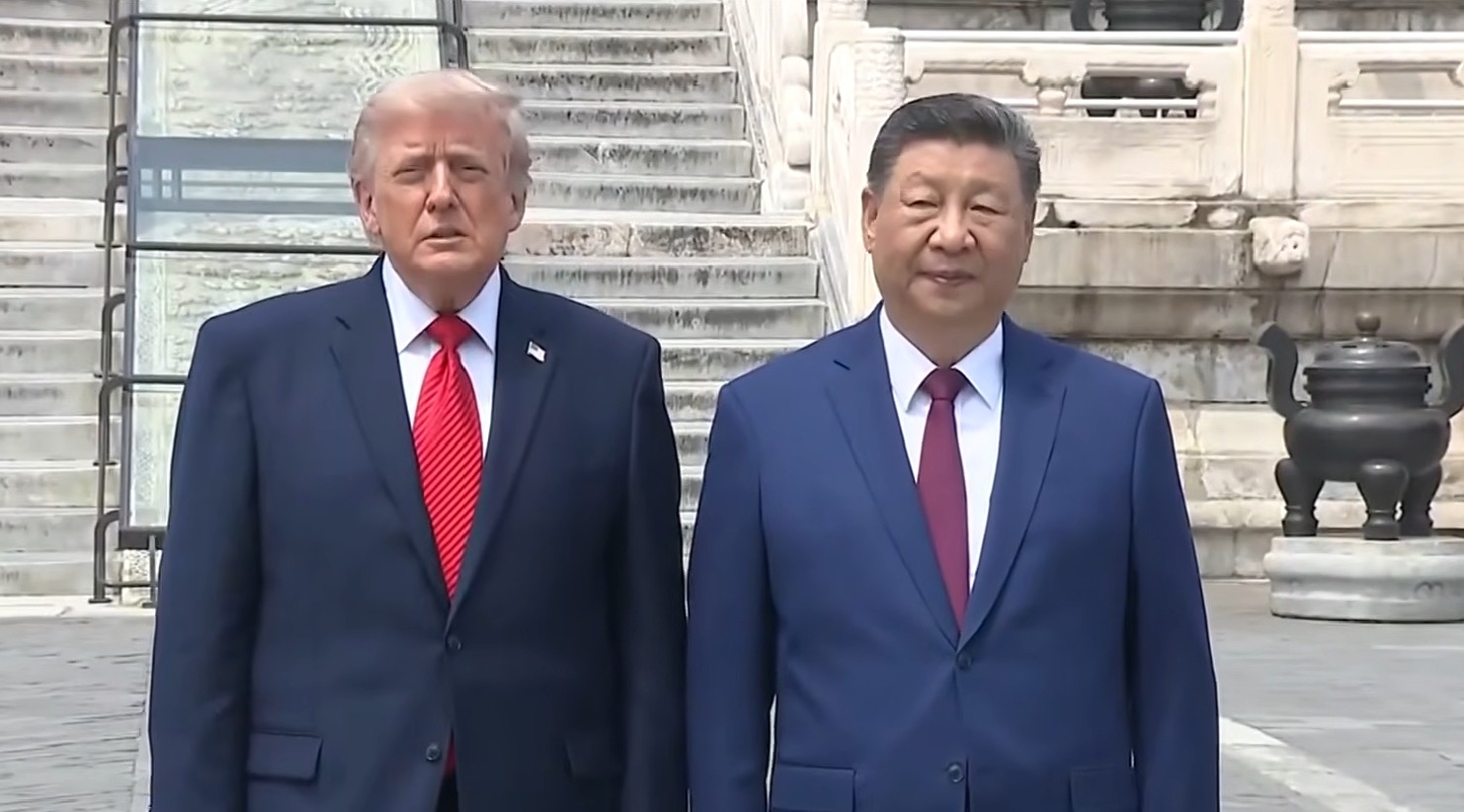
The summit began with immense pageantry at the imposing Mao-era Great Hall of the People, situated on the western edge of Tiananmen Square. Trump was greeted with a red-carpet welcome, a military band fanfare, a gun salute, and rows of schoolchildren waving US and Chinese flags and chanting “welcome!”. Trump appeared to enjoy the ceremony, offering a double thumbs up, and later praised Xi as a “great leader” and a “friend,” predicting that the relationship between the two nations would be “better than ever before”.
However, the diplomatic pleasantries quickly gave way to a stark opening salvo from the Chinese President.
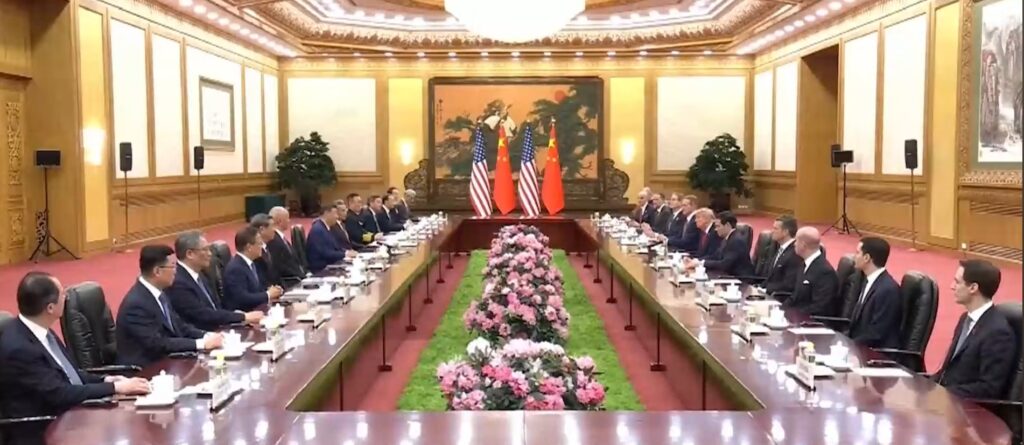
In remarks published by China’s foreign ministry following a two-hour bilateral meeting, Xi Jinping made it unequivocally clear where Beijing’s priorities lay.
• The Ultimate Priority: Xi stated flatly that Taiwan was “the most important issue in China-US relations”.
• The Threat of Conflict: He issued an unusually harsh admonition, warning that if the Taiwan question is mishandled, the two nations could face “confrontation or even conflict”.
• Great Jeopardy: Xi further noted that poor management of this issue could push the entire US-China relationship into a “highly dangerous situation” and “great jeopardy”.
China claims sovereignty over Taiwan, a self-governing island, and has not ruled out the use of force to take control of it. Xi has designated the “unification” with Taiwan as a core priority for his legacy.
2. The Taiwan Tinderbox and the “Thucydides Trap”
To understand why this rhetoric is causing anxiety in global markets, we must look at the recent military and financial escalations surrounding the island democracy.
During the talks, Xi Jinping raised the concept of the “Thucydides Trap”. This is a term popular in foreign policy studies that describes the historical tendency for war to break out when a rising power threatens to displace an established one. Using this concept directly with the US President highlights just how close to the edge Beijing believes the relationship has drifted over Taiwan.
The Core Frictions Driving the Tension:
• US Arms Sales: Xi’s warnings reflect deep displeasure over American military support for Taipei. The Trump administration authorized an $11 billion weapons package for Taiwan in December, the largest ever approved, though fulfillment has not yet begun. Additionally, Taiwanese lawmakers recently broke months of gridlock to approve $25 billion in arms purchases, although this was less than the $40 billion proposed by Taiwan President Lai Ching-te.
• Trump’s Ambivalence: Analysts and US allies have expressed concern that Trump has shown “ambivalence” toward Taiwan. There is speculation that Beijing senses an opportunity to convince Trump to reduce arms sales or alter the US diplomatic stance in exchange for concessions on trade or the Middle East.
• The Official US Stance: Despite the pressure, US Secretary of State Marco Rubio stated after the meeting that US policy toward Taiwan remains “unchanged”. He added that the US makes its position clear when China raises the issue and then moves on to other topics. Following Xi’s remarks, Taiwan’s foreign ministry pushed back, stating that Beijing is “the sole risk to regional peace and stability”.
3. The Shadow of the Iran War and the Strait of Hormuz
While Taiwan dominated Beijing’s agenda, the ongoing war in Iran was a massive focal point for the United States, threatening to overshadow the entire summit. The closure of the Strait of Hormuz has stranded tankers, caused energy prices to spike, and poses a severe threat to global economic growth.
In a rare moment of geopolitical alignment, the US and China found significant common ground regarding the Middle East crisis.
• A “Big Statement” on Arms: Trump revealed that Xi Jinping pledged not to send weapons to Iran. “He said he’s not going to give military equipment, that’s a big statement,” Trump noted, emphasizing that Xi delivered the promise “strongly”. This comes despite recent reports that Chinese arms manufacturers had been discussing deals to supply Tehran.
• Keeping the Waterways Open: Both the White House and the Chinese government confirmed that the two leaders agreed the Strait of Hormuz must remain open to support the free flow of energy and trade. Xi made clear his opposition to the “militarisation” of the waterway and the charging of tolls for passage.
• Shifting Oil Dependency: To further ease tensions and address energy needs, Xi indicated that China could buy more oil from the United States to lessen its reliance on Iranian oil.
4. The Economic Truce and the New “Board of Trade”
As a web developer who constantly monitors tech stocks and market trends, the economic negotiations of this summit are particularly fascinating. The US and China spent much of 2025 embroiled in a dizzying trade war, with both sides raising tariffs to over 100 percent and China imposing export controls on rare earths crucial to US manufacturing.
During this summit in Beijing, efforts were made to carve out a functional economic path forward.
• Extending the Truce: Trump and Xi discussed extending a one-year tariff truce that was initially reached during their meeting in South Korea in October. Xi stated that the economic and trade teams had produced a “generally balanced and positive outcome,” which he described as good news for the world.
• The “Board of Trade”: The Trump administration proposed establishing a “board of trade” with China to address commercial differences. US Treasury Secretary Scott Bessent explained that this board would designate roughly $30 billion worth of non-sensitive or low-value Chinese products (such as fireworks) that Washington does not wish to produce domestically, earmarking them for lower tariffs.
• Tech Titans in Beijing: Underscoring the massive economic stakes, Trump brought a coterie of business world titans with him on Air Force One. Prominent figures including Tesla and SpaceX CEO Elon Musk, Apple CEO Tim Cook, and Nvidia CEO Jensen Huang were in Beijing. Chinese Premier Li Qiang spoke directly with these US business leaders, stressing the need for friendship and cooperation.
Xi promised the American delegation that China’s “doors to the outside world will open wider and wider,” welcoming US companies to expand mutually beneficial cooperation and indicating a commitment to increasing Chinese investment in US industries. Trump also highlighted the need for China to boost its purchases of US agricultural products.
5. What Was Left Off the Table
In the world of high-level diplomacy, what is omitted is often as important as what is discussed.
• Human Rights: Discussions on human rights, which have historically been a focus for previous US administrations, were glaringly absent from the primary dialogue. Maya Wang, the deputy Asia director for Human Rights Watch, noted that President Trump has been “pretty hostile to the concept” of human rights, making it hard to imagine the topic featuring meaningfully in a Trump-Xi meeting.
• Climate Change: Furthermore, despite the US and China together accounting for nearly half of global emissions, cooperation on tackling the climate crisis was not expected to be a focal point of the discussions.
• Readout Discrepancies: Interestingly, while the Chinese government noted that the two leaders discussed the Ukraine conflict and the Korean peninsula, the White House readout highlighted discussions on market access for US firms and fentanyl controls—topics absent from the Chinese summary.
The summit concluded on a forward-looking note, with the US President using his toast at a state banquet to invite Xi Jinping to visit the White House on September 24 later this year.
Vishal V’s Takeaway (Market & Tech Analysis)
As someone who tracks both hardware specifications and SEO trends, the subtext of the 2026 Beijing Summit is written in silicon and supply chains. Here is my strategic breakdown of what this means for the digital and financial landscape:
1. The Semiconductor Cold War: While Taiwan was framed diplomatically as a sovereignty issue by Xi, for the tech CEOs in the room—especially Nvidia’s Jensen Huang and Apple’s Tim Cook—Taiwan is the beating heart of the global technology sector. Taiwan is the world’s leading chipmaker and is absolutely essential for the development of Artificial Intelligence. If Xi’s warnings of “conflict” materialize, or if US support wavers, the entire global tech supply chain could freeze overnight.
2. Market Relief on Iran: The most immediate bullish signal for the global markets from this summit is the mutual agreement to keep the Strait of Hormuz open and Xi’s pledge to halt military support for Iran. This diplomatic alignment removes a massive layer of uncertainty regarding global oil prices and energy inflation, which should provide a stabilizing effect on volatile markets.
3. The Tariff Truce Reality Check: The creation of a “board of trade” for $30 billion in non-sensitive goods is a positive step, but it is a tactical bargain, not a grand strategic settlement. It is classic “calendar management”. For developers running e-commerce sites or managing hardware procurement, expect the core tariffs on advanced electronics and rare earths to remain sticky and complex.
The 2026 Beijing Summit was a masterclass in geopolitical balancing. Xi Jinping set a hard, unforgiving red line on Taiwan while offering an olive branch on the Middle East and trade. Whether this fragile framework of “strategic stability” holds until Xi’s planned visit to the White House in September remains the multi-trillion-dollar question.
Stay tuned to The Rhythm & Reason as we continue to track the intersections of global policy, technology, and your daily life.