

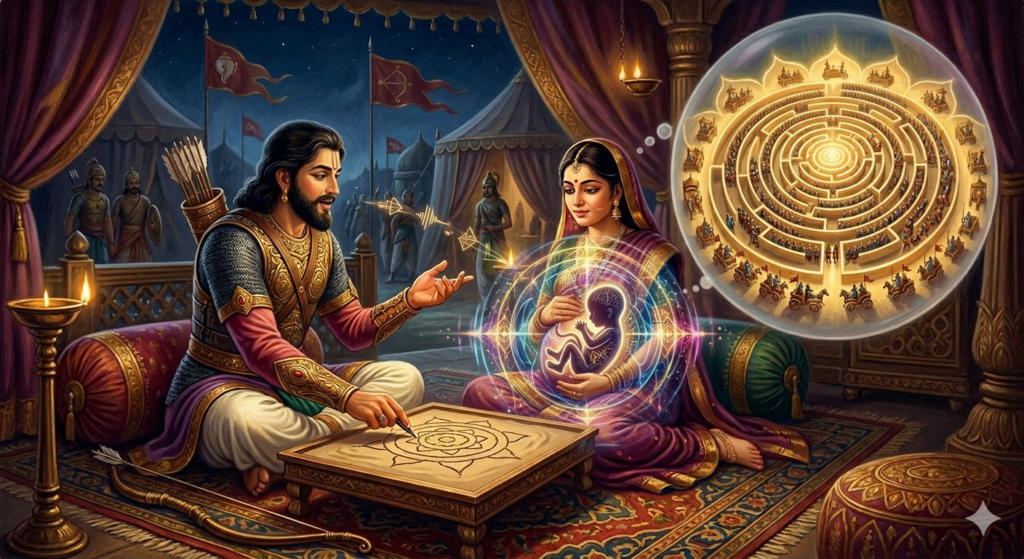
We often think that a child’s education begins the moment they step into a classroom. However, ancient Indian traditions and contemporary neuroscience suggest that the classroom actually begins much earlier—in the mother’s womb.From the legendary tale of Abhimanyu to modern studies by researchers like Dr. K. Jayalakshmi, the evidence is clear: the fetus is not just a growing body, but a conscious, learning being.
1. The Abhimanyu Effect: Ancient Roots
The images highlight the famous story from the Mahabharata. While in his mother Subhadra’s womb, Abhimanyu overheard Arjuna explaining the Chakravyuha (a complex military formation).The text notes that because Subhadra fell asleep halfway through, Abhimanyu only learned how to enter the formation, not how to exit. While once dismissed as mere mythology, today’s science is beginning to find the “rhythm and reason” behind this story.
2 What Does the Science Say?
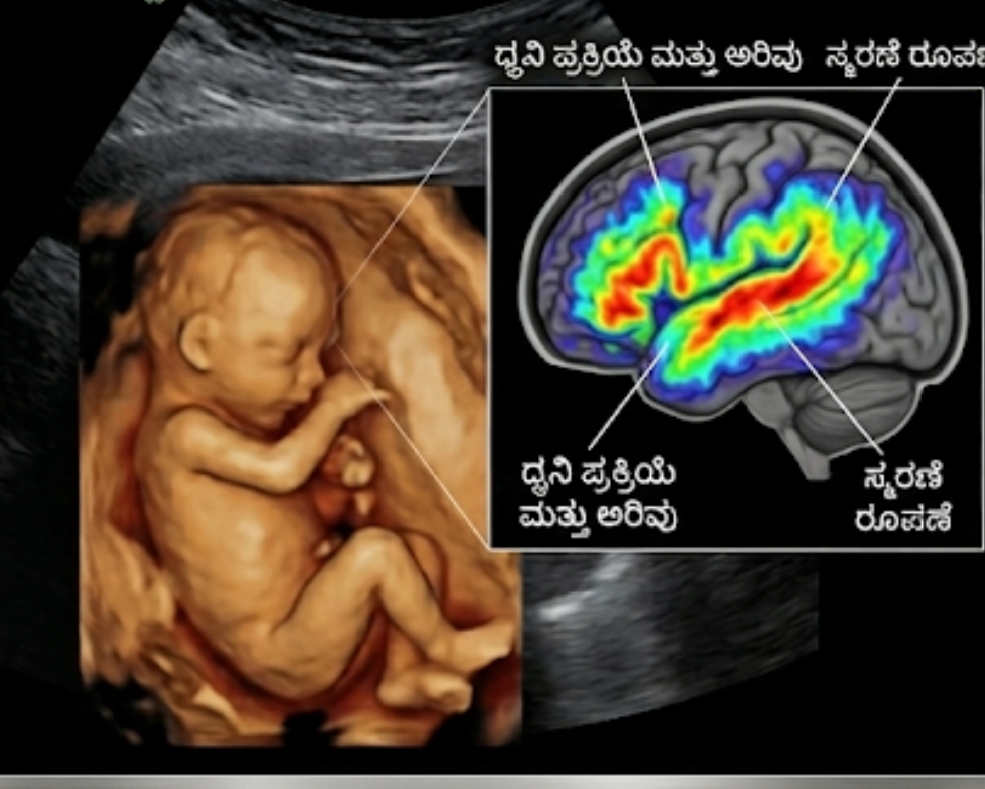
According to the research cited in these pages (including insights from experts like Dr. Albert Liley and Dr margaret lily), the fetus is highly reactive to its environment:
- Hearing and Touch: By the second trimester, a baby can hear sounds, feel vibrations, and even sense the mother’s moods.
- Emotional Echoes: Between 6 to 9 months, the “unborn child” (Ajata Shishu) begins to perceive the mother’s attitudes and emotions, reacting physically to her stress or happiness.
- The Cerebral Cortex: A rich environment and positive maternal health contribute directly to the development of the baby’s brain.
3. “Makkala Rangabhoomi”(ಮಕ್ಕಳ ರಂಗಭೂಮಿ): The Power of Theatre in Pregnancy
One of the most unique concepts discussed in the text is Prenatal Theatre Therapy. Instead of just taking iron supplements, the text suggests that pregnant women should engage in:
- Drama and Music: Watching “heroic stories” or “success sagas” (biographies of legends) rather than stressful TV serials filled with conflict.
- Creative Visualization: Using the “theatre of the mind” to imagine the baby’s future and personality, which keeps the mother in a meditative, joyful state.
- Rangatigalu (Theatre Games): Simple games that involve rhythm and coordination to help the mother stay mentally sharp and physically relaxed.
4. Moving Away from “Mechanical” Birthing
The text raises a concern about the modern trend of “mechanical” births and C-sections driven by fear and stress. It advocates for a return to a joyful, celebratory atmosphere—similar to the traditional (baby shower ) “‘ಹೂವು ಮುಡಿಸುವ'”/ಸೀಮಂತ ceremony—where the community gathers to sing, laugh, and tell stories of virtuous people.
Conclusion: Designing a “Super Child”
The goal isn’t just to have a child who is a scientist or a singer, but a child who is emotionally grounded and mentally vibrant. By curating the “content” a mother consumes—through stories, music, and positive environment—we can influence the “programming” of the next generation.
The Takeaway: Whether it’s through the lens of the Mahabharata or a neurobiology lab in Bengaluru, the message is the same: The womb is the first school.