
In today’s hyper-connected, fast-paced world, our attention spans are under constant siege. Between the endless pinging of smartphone notifications, overflowing email inboxes, and the infinite scroll of social media, maintaining focus has become a modern-day superpower. Many of us struggle with brain fog, easily getting distracted from our core tasks, which severely impacts our productivity and overall mental well-being.
But what if the antidote to our modern digital distractions lies in an ancient, 5,000-year-old practice?
Yoga is often praised for its incredible physical benefits—building flexibility, enhancing core strength, and improving posture. However, at its deepest core, yoga is a profound mental discipline. The ancient sage Patanjali defined yoga as “Yogas chitta vritti nirodhah,” which translates to “Yoga is the cessation of the fluctuations of the mind.” By synchronizing conscious breathing (Pranayama) with specific physical postures (Asanas), we can actively rewire our brains, calm our nervous systems, and unlock razor-sharp focus.
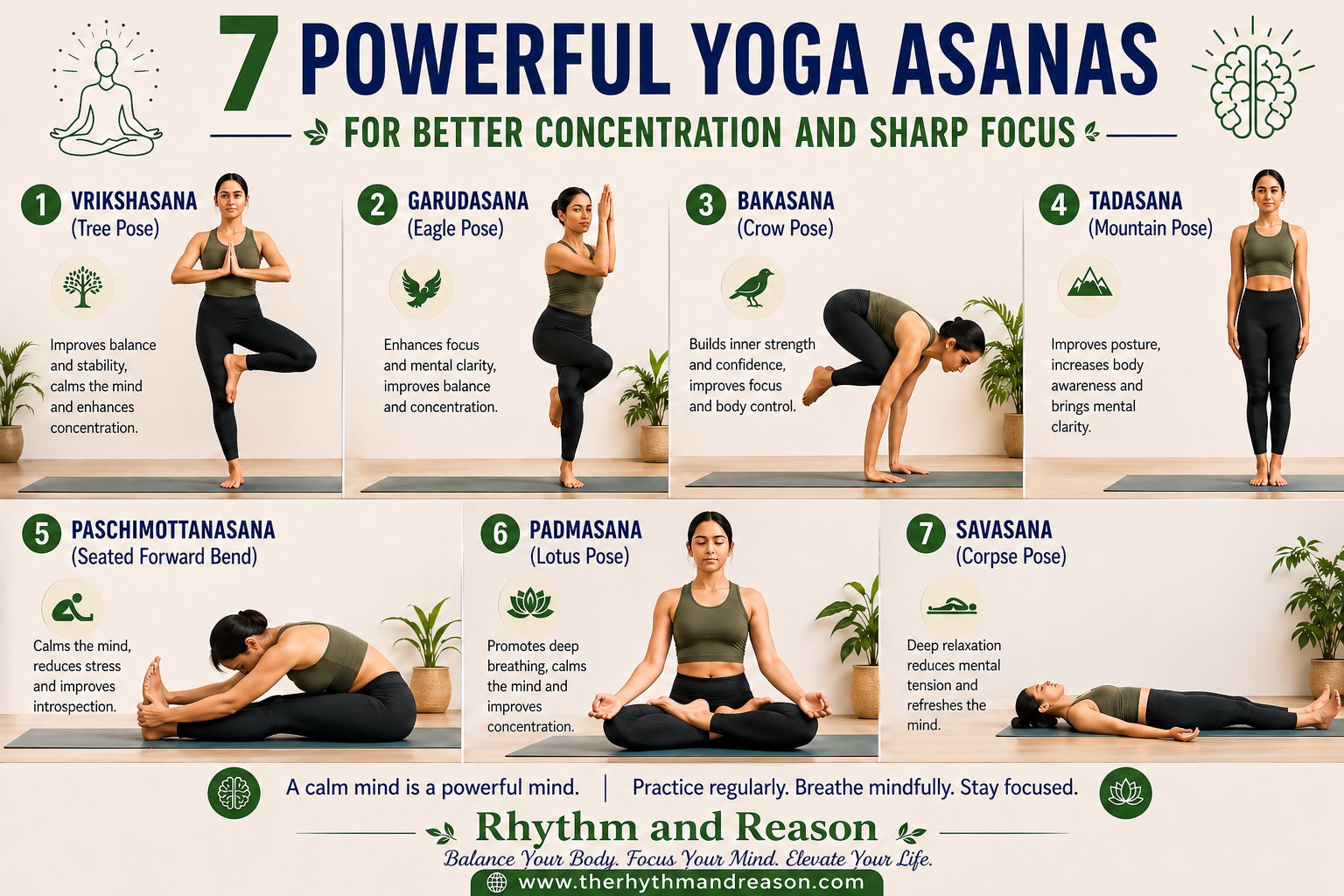
In this comprehensive guide, we will dive deep into the science of mental clarity and explore 7 powerful yoga asanas for better concentration that you can integrate into your daily routine.
The Science of Yoga and Mental Focus
Before we step onto the mat, it is important to understand exactly how yoga physically changes the brain to enhance concentration.
When we are stressed or overwhelmed, our brain operates predominantly in high-frequency “Beta” brainwaves, triggering the release of cortisol (the stress hormone). This puts our nervous system in a “fight or flight” mode, making it nearly impossible to focus on deep, meaningful work.
Practicing yoga shifts the brain into “Alpha” and “Theta” brainwave states, which are associated with deep relaxation, creativity, and flow states. The mindful breathing required during yoga increases the flow of oxygenated blood to the brain, specifically nourishing the prefrontal cortex—the area responsible for decision-making, attention, and logical thinking. Furthermore, yoga stimulates the parasympathetic nervous system (the “rest and digest” mode), clearing away mental clutter and leaving behind a calm, centered, and highly focused mind.
This state of focused concentration is known in Yogic philosophy as Dharana, the sixth limb of yoga. Let us look at the specific postures designed to cultivate this profound mental state.
Yoga Asanas for Better Concentration
1. Vrikshasana (Tree Pose)
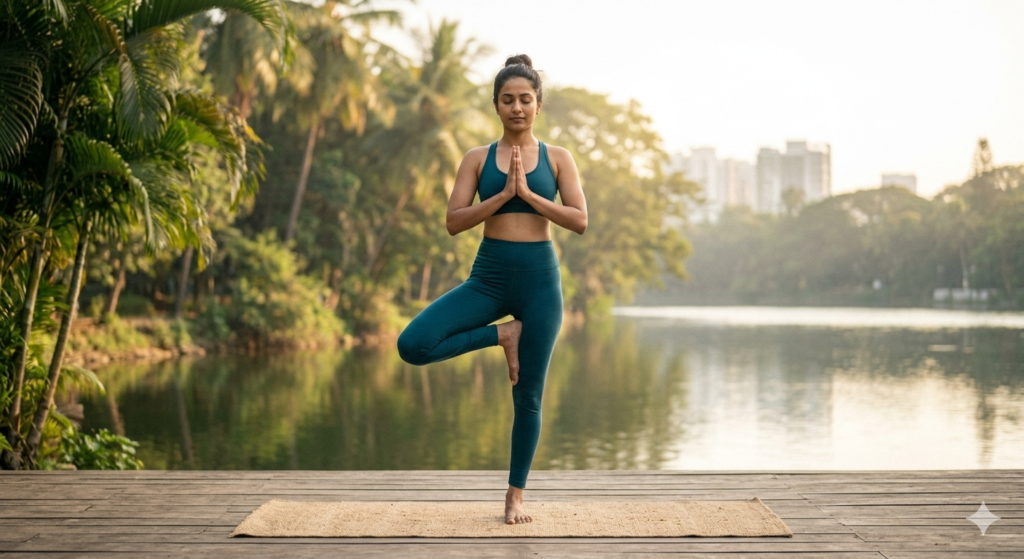
When it comes to yoga asanas for better concentration, balancing poses are unparalleled. Vrikshasana, or the Tree Pose, is the ultimate test of both physical and mental steadiness. If your mind is wandering to your grocery list or an upcoming meeting, you will inevitably lose your balance and wobble. To stand like a tree, your mind must be rooted in the present moment.
How to do Vrikshasana:
1. Stand tall on your yoga mat in a neutral position with your feet together and arms by your sides.
2. Shift your body weight entirely onto your left leg.
3. Bend your right knee, reach down, and place the sole of your right foot flat against the inner thigh of your left leg. (If you are a beginner, place it on your inner calf, but strictly avoid placing it directly on the knee joint).
4. Find a Drishti—a non-moving focal point in front of you—and lock your eyes on it.
5. Once you feel stable, inhale deeply and bring your palms together in front of your chest in an Anjali Mudra (prayer position).
6. For a deeper challenge, raise your folded hands high above your head, reaching toward the ceiling like the branches of a tree.
7. Hold the pose for 5 to 10 deep breaths, then gently release and repeat on the other side.
The Focus Benefit:
Vrikshasana forces the left and right hemispheres of your brain to work in perfect harmony to maintain equilibrium. The act of fixing your gaze (Drishti) actively trains your mind to ignore peripheral distractions, sharpening your single-pointed focus.
2. Garudasana (Eagle Pose)
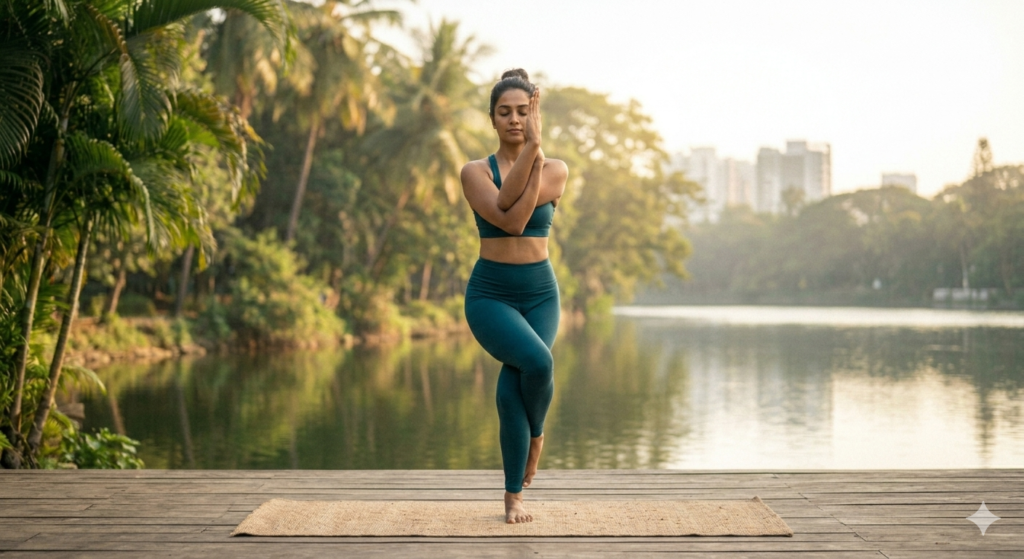
Garudasana is a complex, twisting balancing pose that demands absolute presence of mind. Named after Garuda, the mythical eagle king of the birds in Hindu mythology, this pose requires you to wrap your limbs tightly around each other. Because it restricts your physical space, it draws your mental energy intensely inward.
How to do Garudasana:
1. Begin by standing straight with your feet together.
2. Slightly bend both your knees. Lift your right leg and cross it over your left thigh. Try to tuck your right toes securely behind your left calf.
3. Extend both arms straight out in front of you.
4. Cross your left arm over your right arm, bend your elbows, and wrap your forearms around each other until your palms touch.
5. Keep your spine straight, sink your hips slightly lower as if sitting in an invisible chair, and lift your elbows to the height of your shoulders.
6. Fix your gaze steadily on your thumbs.
7. Hold for 5 deep, controlled breaths, then untangle yourself and switch sides.
The Focus Benefit:
The intricate binding of the arms and legs requires intense neurological coordination. The slight compression of the limbs restricts blood flow temporarily; when the pose is released, a fresh surge of oxygenated blood floods the body and brain, instantly washing away lethargy and enhancing cognitive alertness.
3. Bakasana (Crow Pose)
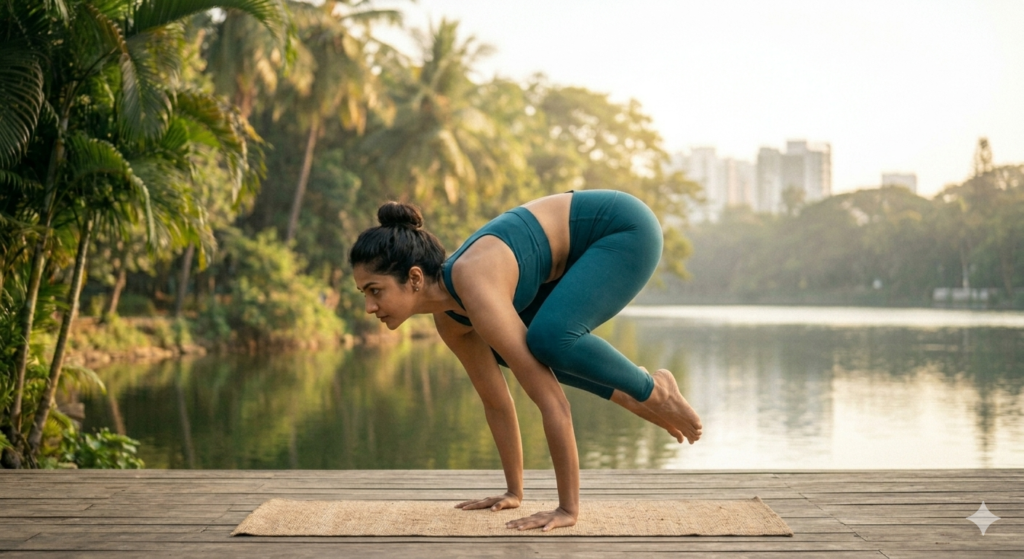
Bakasana is a foundational arm balance that pushes you out of your comfort zone. Balancing your entire body weight on your hands requires not just immense core and upper body strength, but unbreakable mental endurance. There is no room for a wandering mind in Crow Pose; fear and distraction will result in an immediate loss of balance.
How to do Bakasana:
1. Start in a deep squat position (Malasana) on your mat.
2. Place your hands flat on the floor right in front of you, shoulder-width apart, with your fingers spread wide for a strong foundation.
3. Lift your hips high into the air and bend your elbows slightly backward.
4. Bring your knees as high up on your triceps (the back of your upper arms) as possible, aiming for the armpits.
5. Look slightly forward, not down at your hands.
6. Slowly shift your body weight forward into your hands. As you lean forward, your feet will naturally become light and lift off the ground.
7. Engage your core tightly and try to bring your heels toward your buttocks.
8. Hold for as long as you can maintain steady breathing, then gently lower your feet back to the mat.
The Focus Benefit:
Bakasana forces you to confront and overcome the psychological fear of falling forward. By learning to trust your physical strength and maintaining a laser-sharp forward gaze, you build mental resilience. This resilience translates directly off the mat, helping you tackle difficult, anxiety-inducing tasks with calm, focused precision.
4. Tadasana (Mountain Pose)
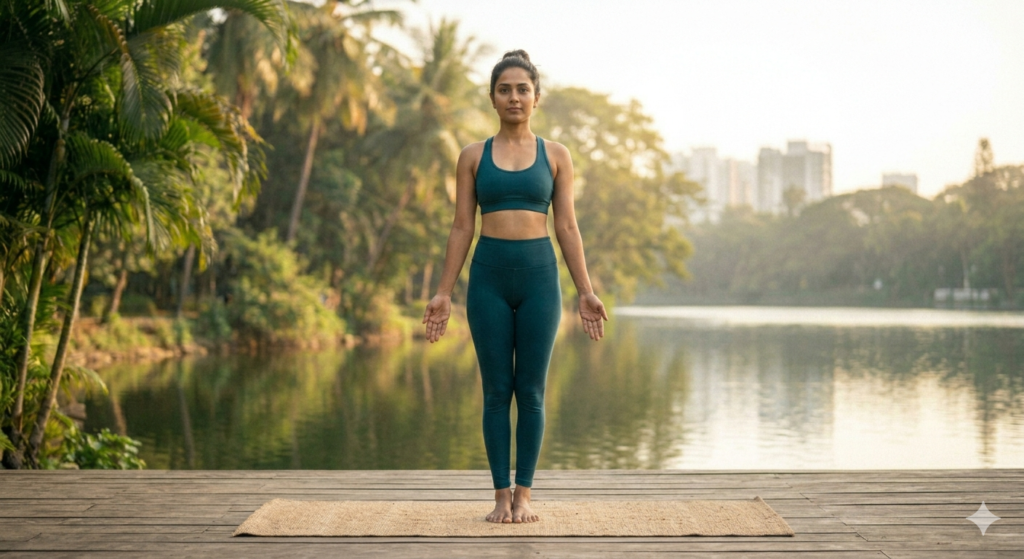
At first glance, Tadasana looks like you are simply standing still. However, true Tadasana is a highly active and engaging posture. It is the architectural blueprint for all other standing poses in yoga. To build better concentration, we must learn how to stand grounded and present.
How to do Tadasana:
1. Stand with your big toes touching and your heels slightly apart.
2. Lift and spread your toes, then lay them softly back down on the mat, establishing a firm connection with the earth.
3. Engage your thigh muscles, lifting your kneecaps slightly.
4. Tuck your tailbone in gently and engage your abdominal muscles.
5. Roll your shoulders up, back, and down, opening your chest. Let your arms hang naturally by your sides with your palms facing forward.
6. Ensure your chin is parallel to the floor, and the crown of your head is reaching toward the ceiling.
7. Close your eyes, or soften your gaze, and take 10 deep, conscious breaths.
The Focus Benefit:
Tadasana is an exercise in total body awareness. By consciously engaging muscles from your toes to your neck, you bring your wandering mind back into your physical body. It serves as a mental “reset button,” clearing away chaotic thoughts and providing a clean, focused slate for the mind.
5. Padmasana (Lotus Pose)
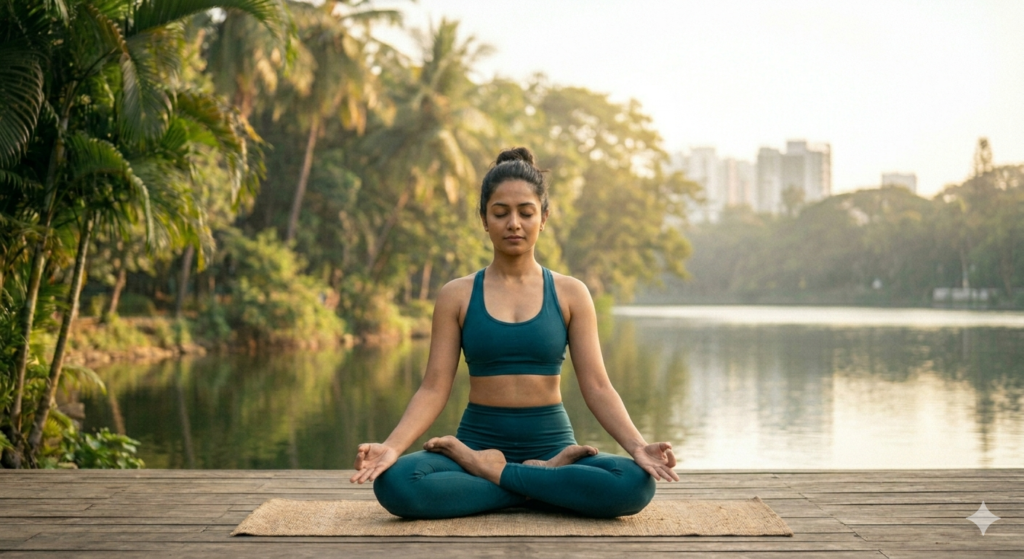
When you think of a meditating yogi, you almost certainly picture them in Padmasana. The Lotus Pose is the ultimate seated posture designed specifically for deep meditation, breathwork (Pranayama), and cultivating Dharana (concentration).
How to do Padmasana:
1. Sit comfortably on your mat with your legs extended straight out in front of you. Keep your spine erect.
2. Gently bend your right knee and cradle your right foot. Carefully place your right foot onto your left thigh, bringing the heel as close to your abdomen as possible. The sole of the foot should point upward.
3. Once the right leg is settled, gently bend your left knee and place your left foot over your right thigh.
4. Rest your hands on your knees in Gyan Mudra (bringing the tips of your index finger and thumb together).
5. Keep your head, neck, and spine perfectly aligned.
6. Close your eyes and direct your complete attention to the natural rhythm of your breath.
7. (Note: Padmasana requires very open hips. If you experience knee pain, practice Ardha Padmasana, or Half-Lotus, by placing only one foot on the opposite thigh).
The Focus Benefit:
The cross-legged lock of Padmasana physically anchors the body, preventing slouching and keeping the spine perfectly straight. This straight spine allows the nervous system to communicate efficiently and the energy (Prana) to flow freely from the base of the spine to the crown of the head. It significantly calms the mind, making it the perfect posture for long periods of uninterrupted focus.
6. Paschimottanasana (Seated Forward Bend)
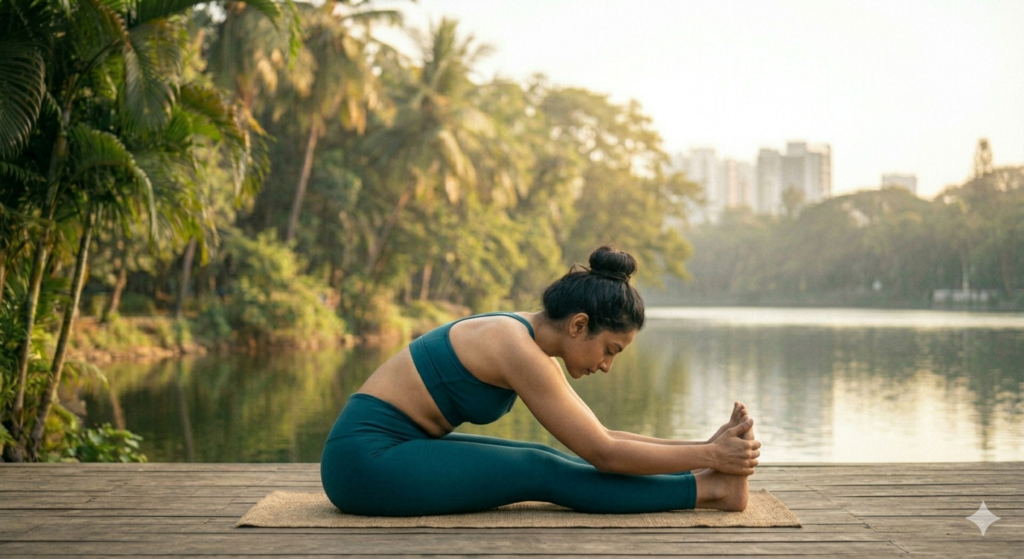
Stress is the greatest enemy of concentration. When our minds are racing with anxiety, we cannot focus. Paschimottanasana is a deeply cooling and restorative posture that turns the senses inward, actively combating mental fatigue and stress.
How to do Paschimottanasana:
1. Sit on your mat with your legs stretched straight out in front of you. Keep your feet flexed, toes pointing toward the ceiling.
2. Inhale deeply, raising both arms straight up above your head, lengthening your spine.
3. As you exhale, hinge forward directly from your hips (not your waist). Reach toward your toes.
4. Hold onto your shins, ankles, or the outer edges of your feet, depending on your flexibility. Do not round your back forcefully; prioritize keeping the spine straight.
5. With every inhalation, slightly lift and lengthen your torso. With every exhalation, try to fold a little deeper into the stretch.
6. Allow your head and neck to relax completely.
7. Hold this soothing pose for 1 to 3 minutes, breathing deeply into your back.
The Focus Benefit:
Forward folds are inherently introspective. Paschimottanasana gently massages the abdominal organs and stretches the entire back of the body, releasing physical tension stored in the hamstrings and spine. By physically turning inward and closing off visual distractions, this asana pacifies an agitated mind, lowers the heart rate, and restores cognitive clarity.
7. Savasana (Corpse Pose)
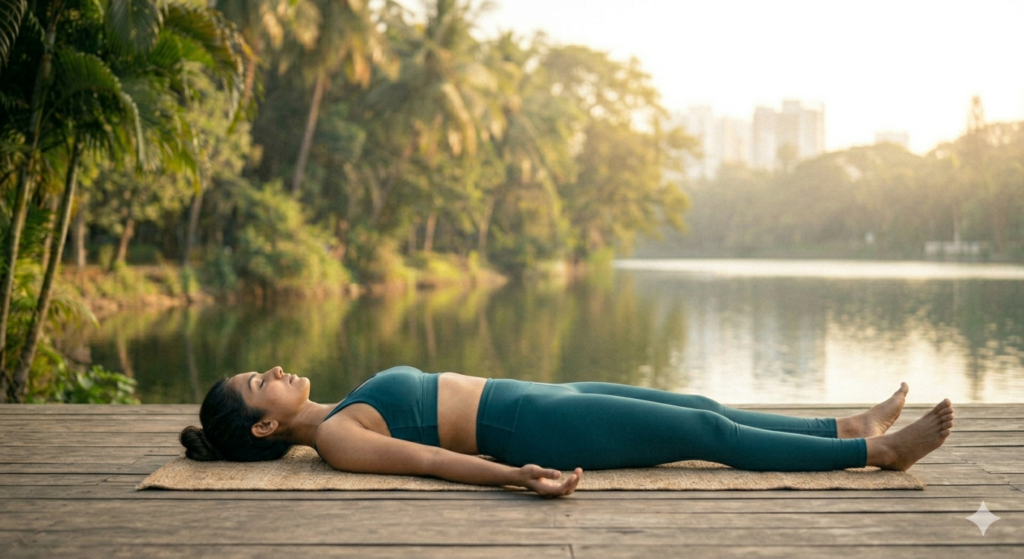
It is a common misconception that Savasana is just “nap time” at the end of a yoga class. In reality, Savasana is the most important and arguably the most difficult pose to master. It is the state of conscious relaxation, where the body is completely still, but the mind remains sharply awake and aware.
How to do Savasana:
1. Lie flat on your back on your yoga mat.
2. Separate your legs slightly wider than hip-width apart, allowing your feet to splay open naturally.
3. Rest your arms a few inches away from your torso, with the palms facing upward in a gesture of receptivity.
4. Tuck your shoulder blades slightly under your back to open the chest.
5. Close your eyes.
6. Mentally scan your body from your toes up to the crown of your head, consciously releasing any lingering tension in your muscles. Relax your jaw and the space between your eyebrows.
7. Let go of any control over your breath; allow it to return to its natural, effortless rhythm.
8. Rest here for 5 to 15 minutes.
The Focus Benefit:
Savasana trains the brain to remain alert without attaching itself to passing thoughts. As you lie still, thoughts will inevitably arise. The practice is to observe these thoughts without judgment and let them float away without getting distracted by them. This conscious relaxation consolidates memory, integrates the physical benefits of the previous poses, and rejuvenates the brain, leaving you highly focused and ready to tackle complex mental tasks off the mat.
Building Your Focus Routine
Knowing these 7 powerful yoga asanas for better concentration is just the first step; the real magic lies in consistent application. You do not need to spend two hours a day to see results.
To build a routine, try dedicating just 20 minutes each morning before you start your workday or study session.
• Start with the grounding energy of Tadasana.
• Move into the balancing challenges of Vrikshasana and Garudasana to wake up the brain’s neuro-pathways.
• If you feel energized, attempt Bakasana to build mental endurance.
• Cool down and draw your senses inward with Paschimottanasana.
• Sit in Padmasana for 5 minutes of mindful breathing or meditation.
• Always conclude with 5 minutes of Savasana to seal the practice.
When you practice these poses, remember that losing your balance or getting distracted is completely normal. Yoga is not about perfection; it is about the practice of continually bringing your attention back to your breath and your body, time and time again. This act of “returning” is exactly how you build the mental muscle of concentration.
Conclusion
The struggle for focus in a distracted world is real, but it is not a lost battle. By incorporating these 7 yoga asanas into your daily wellness routine, you are doing much more than just stretching your body. You are actively rewiring your nervous system, managing stress hormones, and training your mind to sustain deep, uninterrupted attention.
Roll out your mat, take a deep breath, and allow the ancient science of yoga to sharpen your modern mind. The clarity, productivity, and peace you are seeking are just a few breaths away.
Frequently Asked Questions (FAQs)
Q1: How long does it take to see improvements in concentration through yoga?
A: While you may feel a temporary sense of mental clarity immediately after your first session, consistent practice is key. Most practitioners notice a significant, lasting improvement in their attention span and focus after 4 to 6 weeks of daily, mindful practice.
Q2: Can I practice these asanas if I have absolutely no flexibility?
A: Absolutely! Yoga is not about touching your toes; it is about what you learn on the way down. Poses like Vrikshasana (Tree Pose) and Tadasana (Mountain Pose) require minimal flexibility. For seated poses like Padmasana, you can easily use modifications like sitting cross-legged (Sukhasana) until your hips open up.
Q3: What is the best time of day to practice yoga for focus?
A: The best time is the time you can consistently commit to. However, practicing early in the morning on an empty stomach is highly recommended. It sets a calm, focused tone for the rest of your day and clears morning brain fog.
Q4: Do I need to hold the poses for a long time to improve my concentration?
A: Holding poses builds endurance, but the quality of your focus is more important than the duration. Holding a balancing pose for 5 deep, completely focused breaths is far more beneficial than holding it for a minute while your mind wanders to your to-do list.
Q5: How does breathing (Pranayama) help with concentration during these poses?
A: Deep, rhythmic breathing activates the parasympathetic nervous system, which lowers your heart rate and reduces anxiety. By tethering your wandering mind to the steady rhythm of your breath, you create an anchor that prevents distractions from pulling you away.
Recommended Reading from The Rhythm & Reason:
Looking for inspiration to stay strong during tough times? Read theLife and Legacy of Swami Vivekananda.
Disclaimer: > The content provided on The Rhythm & Reason, including text, graphics, images, and other material, is for informational and educational purposes only. It is not intended to be a substitute for professional medical advice, diagnosis, or treatment.Always seek the advice of your physician or other qualified health provider with any questions you may have regarding a medical condition or before starting any new exercise, yoga, or fitness program. Do not disregard professional medical advice or delay in seeking it because of something you have read on this website. If you experience any pain, dizziness, or discomfort while performing any of the poses mentioned, stop immediately and consult a healthcare professional. By performing any fitness exercises, you are performing them at your own risk.
[…] Commuting is the “dead time” of the modern day. Between the stop-and-go traffic of Bengaluru and the cramped seating of public transport, our bodies become stiff and our minds become reactive. At The Rhythm and Reason, we believe every minute is an opportunity for optimization. Here is how to use your commute to engineer a better physical state without anyone even noticing you’re doing yoga. […]