

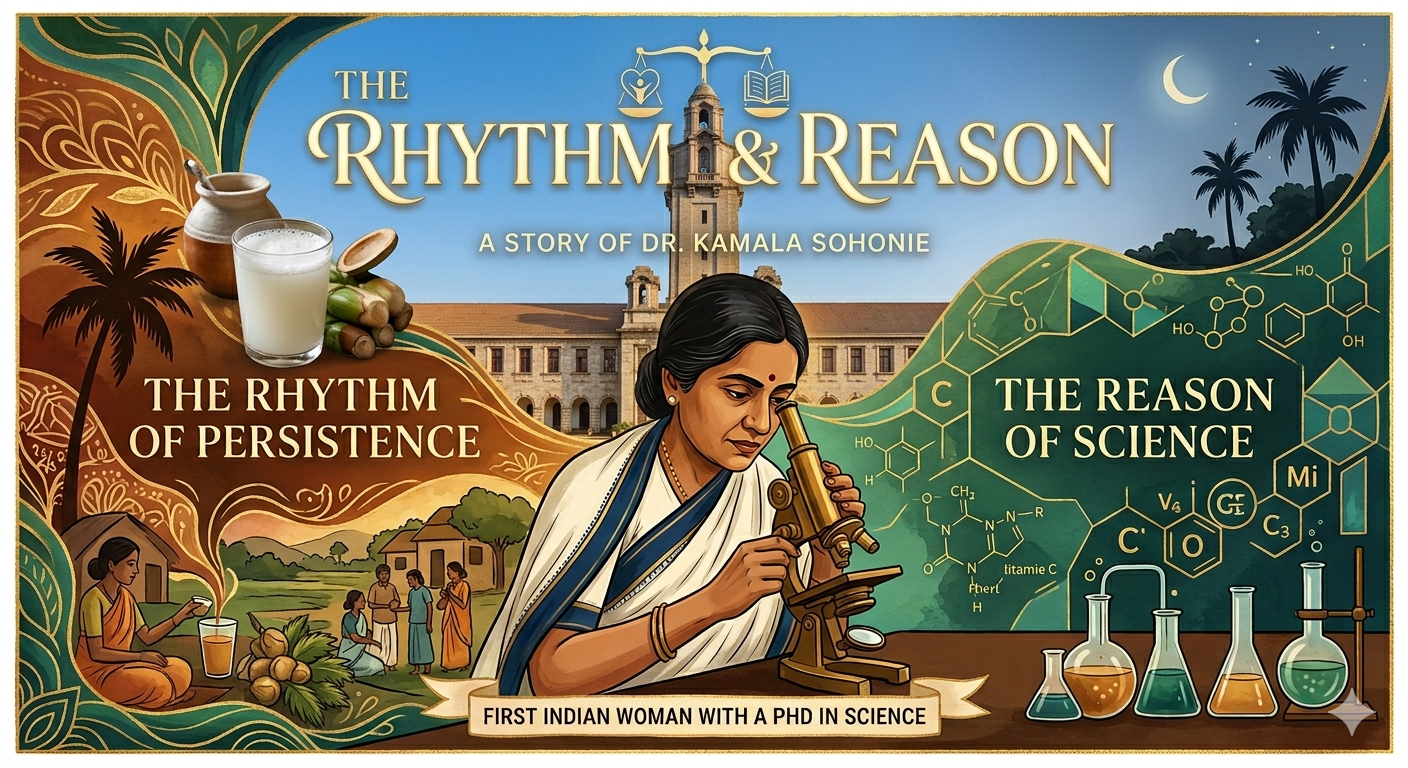
History books are filled with tales of political Satyagrahas—non-violent resistance movements that helped India secure its independence. But how often do we hear about a Satyagraha staged inside a laboratory? How often do we read about a young woman who sat in protest outside the office of a Nobel Laureate, demanding her rightful place in the world of scientific research?
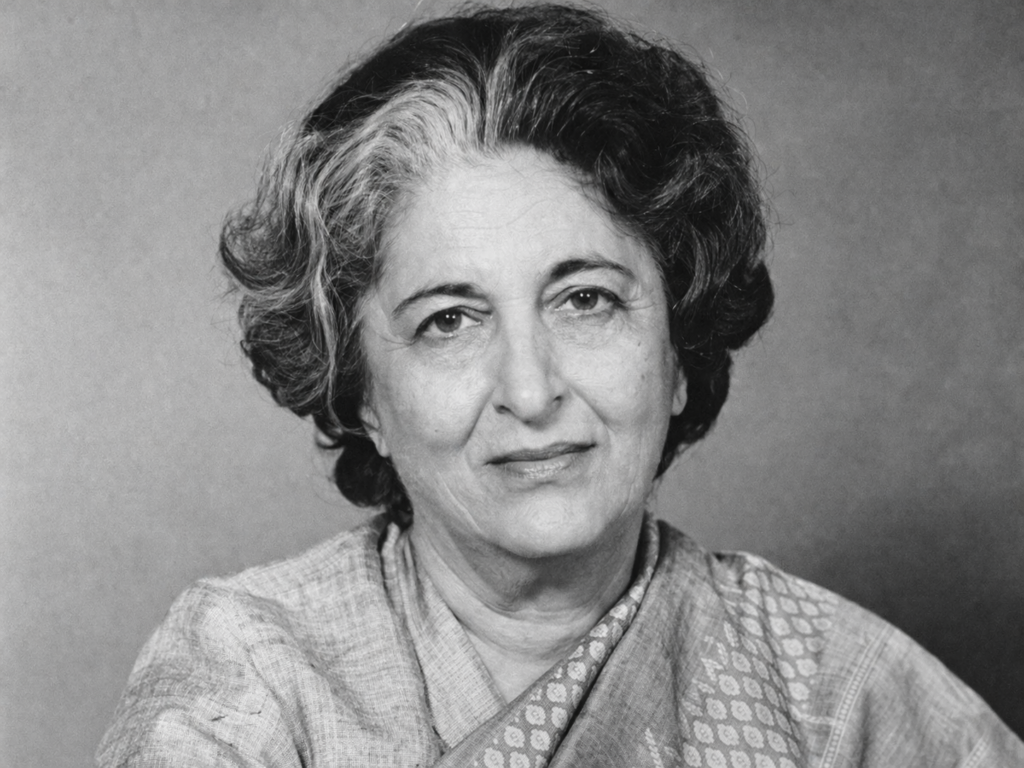
This is the extraordinary story of Dr. Kamala Sohonie, a brilliant mind who fought against deeply entrenched gender biases to become the first Indian woman to earn a PhD in a scientific discipline. In this comprehensive Kamala Sohonie biography, we will delve into her early life, her historic confrontation with Sir C.V. Raman at the Indian Institute of Science (IISc), her groundbreaking discovery of Cytochrome C in plant cells, and her lifelong dedication to eradicating malnutrition in India.
For every young girl who dreams of looking through a microscope, Kamala Sohonie’s life is a testament to the fact that sometimes, you must fight for the right to discover.
1. Early Life: A Legacy of Chemistry
Born on June 18, 1912, in Indore, Madhya Pradesh, Kamala Bhagvat (later Sohonie) was destined for a life of academic rigor. She grew up in an intellectually stimulating environment. Her father, Narayanarao Bhagvat, and her uncle, Madhavrao Bhagvat, were both distinguished chemists. Interestingly, both had been among the first batch of students to graduate from the prestigious Tata Institute of Sciences (which later became the Indian Institute of Science, or IISc) in Bangalore.
Growing up surrounded by test tubes, scientific journals, and discussions about chemical properties, young Kamala developed an intense fascination for science. She was a brilliant student, seamlessly absorbing the complex concepts her family discussed. In 1933, she graduated with a BSc degree in Physics and Chemistry from Bombay University, achieving the distinction of being the university topper.
With her stellar academic record and her family’s prestigious background, the next logical step was to apply to her father’s alma mater, the IISc, for a Master’s degree. She submitted her application, expecting an acceptance letter based purely on her overwhelming merit.
2. The Historic Satyagraha at IISc
What happened next became a defining moment not just in the Kamala Sohonie biography, but in the history of Indian science.
The Director of IISc at the time was none other than Sir C.V. Raman, India’s most celebrated scientist and the first Asian to win a Nobel Prize in Physics. Despite her top university ranking, Sir C.V. Raman outright rejected Kamala’s application. His reason had nothing to do with her intellect or academic scores; it was entirely based on her gender.
In the 1930s, the prevailing societal belief—even among highly educated men—was that women were not suited for the rigors of scientific research. Sir C.V. Raman believed that a woman in his institute would be a “distraction” to the male researchers and that she would not be able to handle the late-night laboratory work.
The Protest
Kamala was outraged by this blatant discrimination. Instead of accepting defeat and choosing a conventional path, she decided to fight back. Inspired by the ongoing Indian freedom struggle and Mahatma Gandhi’s methods of peaceful protest, the 21-year-old Kamala marched to Sir C.V. Raman’s office in Bangalore.
When he refused to change his mind, she staged a Satyagraha (a non-violent sit-in protest) right outside his office door. She demanded to know why her merit was being ignored solely because she was a woman. She famously stated that a Nobel Laureate should not have such a narrow and prejudiced mindset.
The Imposed Conditions
Faced with her unyielding determination and the potential for a public scandal, Sir C.V. Raman finally yielded, but not without imposing strict, humiliating conditions:
1. She would not be granted regular student status; she would be on “probation” for a year.
2. Her continued stay would depend entirely on her research guide’s approval of her work.
3. She was sternly warned that her presence must not be a “distraction” to the male researchers.
Kamala accepted the conditions without hesitation. She knew that the only way to silence her critics was through undeniable scientific excellence.
3. Proving the Skeptics Wrong: Research in Bangalore
Once inside the laboratory, Kamala’s work ethic silenced every skeptic, including Sir C.V. Raman. Her mentor at IISc was Sri Srinivasayya, a strict but fair teacher who recognized her raw potential.
Kamala threw herself into her research. She began studying the proteins found in milk, pulses, and legumes, focusing on their nutritional value. This research was highly relevant to India, a country plagued by poverty and malnutrition. She worked late into the night, adhering to all the stringent rules imposed upon her.
Her dedication bore fruit. Not only did she successfully complete her probationary period, but her exceptional research earned her a Master’s degree (MSc) with distinction in 1936. More importantly, her exemplary conduct and brilliant academic output forced Sir C.V. Raman to change his stance on female students. From the following year, the Indian Institute of Science opened its doors to women, paving the way for generations of female scientists in India. Kamala Sohonie had won her Satyagraha.
4. Cambridge University and the Discovery of Cytochrome C
Following her triumph at IISc, Kamala aimed higher. In 1937, she secured a prestigious research scholarship to study at Cambridge University in the United Kingdom.
At Cambridge, she initially worked in the laboratory of Dr. Derek Richter. When Dr. Richter left, she transitioned to work under the renowned plant biochemist Dr. Robin Hill. This period marked the pinnacle of her fundamental scientific research.
What is Cytochrome C?
While studying plant tissues, Kamala made a groundbreaking discovery. She discovered the presence of Cytochrome C in the cells of potatoes.
To understand the magnitude of this discovery, one must look at cellular biology. Cytochrome C is an enzyme that plays a critical role in the electron transport chain—the process by which cells generate energy (respiration). Before her discovery, it was believed that this complex respiratory mechanism was unique to animal cells. By proving the existence of Cytochrome C in plant cells, Kamala Sohonie established a fundamental biological truth: that every living cell, whether plant or animal, respires in the exact same fundamental way.
Her research was so profound and undeniable that she submitted a thesis summarizing her findings. Astonishingly, she completed her PhD in just 14 months. With this, Dr. Kamala Sohonie cemented her place in history as the first Indian woman to receive a PhD in a scientific discipline.
5. Return to the Motherland: A Focus on Nutrition
With a PhD from Cambridge and international recognition, Dr. Sohonie received numerous lucrative job offers from pharmaceutical companies and research labs in the West. However, she was deeply patriotic. The Indian independence movement was at its peak, and she believed her scientific knowledge belonged to her newly emerging nation.
In 1939, she returned to India and was appointed as a Professor and the Head of the Department of Biochemistry at Lady Hardinge Medical College in New Delhi. Later, she served as the Assistant Director of the Nutrition Research Laboratory in Coonoor, where she focused on the effect of vitamins on human health.
During this time, she married M.V. Sohonie, an actuary by profession, and relocated to Bombay (now Mumbai). She joined the Royal Institute of Science in Bombay as a Professor in the Department of Biochemistry, a place where she would spend the rest of her illustrious academic career.
6. The ‘Neera’ Project: Science for the Masses
Dr. Kamala Sohonie’s greatest contribution to Indian society came about through a suggestion from Dr. Rajendra Prasad, who would later become the first President of independent India.
Dr. Prasad was aware of the severe malnutrition affecting the poorest sections of Indian society, particularly pregnant women and growing children. He suggested that Dr. Sohonie investigate the nutritional properties of Neera, the sweet sap extracted from palm trees before it ferments into toddy (alcohol).
Transforming a Local Drink into a Nutritional Powerhouse
Taking up the challenge, Dr. Sohonie and her team of researchers plunged into a detailed biochemical analysis of Neera. The results were astounding. She discovered that Neera was incredibly rich in Vitamin C and other essential vitamins, iron, and carbohydrates. Furthermore, she found that the Vitamin C in Neera survived the boiling process intact, meaning it could be concentrated into a nutritious jaggery (palm gur) or molasses.
She proved that incorporating Neera into the diets of malnourished tribal children and pregnant women resulted in significant improvements in their overall health and immunity. Her research elevated a humble, local drink into a powerful, affordable tool against malnutrition.
For her pioneering work on Neera and its direct impact on public health, Dr. Kamala Sohonie was awarded the prestigious Rashtrapati Award (President’s Award).
7. Leadership and Legacy at the Institute of Science
Dr. Sohonie was not only a brilliant researcher but also an exceptional educator and administrator. Her students remembered her as a demanding but deeply nurturing mentor. She instilled in them the same rigorous scientific temper that she had developed.
She focused her department’s research on consumer items and local foods—studying the nutritional loss during the processing of pulses, the quality of milk supplied by the Aarey Milk project in Bombay, and the nutritional value of local grains. Her science was never isolated in an ivory tower; it was always directed toward solving the everyday problems of the Indian public.
Eventually, she shattered another glass ceiling by becoming the first female Director of the Institute of Science, Bombay. Under her leadership, the institute flourished as a premier center for biochemical research in India.
8. The End of a Glorious Era
Dr. Kamala Sohonie lived a long, fulfilling life, witnessing the evolution of Indian science over the 20th century. She remained an active voice in the scientific community long after her official retirement.
In 1998, at the age of 86, she was invited by the Indian Council of Medical Research (ICMR) to a grand felicitation ceremony in New Delhi to honor her unparalleled contributions to science and her role as a trailblazer for women. Tragically, but perhaps fittingly, she collapsed during the very ceremony where she was being honored. She passed away shortly after, leaving behind a legacy that continues to inspire.
Conclusion: The Impact of a Single Satyagraha
The Kamala Sohonie biography is a powerful narrative of grit, intellect, and quiet rebellion. When she sat outside Sir C.V. Raman’s office in 1933, she was not just fighting for her own admission; she was fighting for every woman who would come after her.
Her Satyagraha forced the Indian scientific establishment to recognize that intelligence knows no gender. From unlocking the secrets of plant respiration at Cambridge to fighting malnutrition with palm nectar in rural India, Dr. Sohonie proved that true science serves humanity.
Today, as thousands of female scientists walk the halls of the Indian Institute of Science and lead space missions at ISRO, they walk on the path paved by the young woman from Indore who refused to take “no” for an answer. The woman who staged a Satyagraha for science.
Frequently Asked Questions (FAQs)
Q1: Who was Dr. Kamala Sohonie?
A: Dr. Kamala Sohonie was a pioneering Indian biochemist who became the first Indian woman to earn a PhD in a scientific discipline (from Cambridge University).
Q2: Why did Kamala Sohonie stage a Satyagraha?
A: In 1933, Nobel Laureate Sir C.V. Raman refused her admission to the Indian Institute of Science (IISc) solely because she was a woman. She staged a peaceful sit-in protest (Satyagraha) outside his office until he agreed to admit her, thereby opening the doors of IISc to women.
Q3: What was Kamala Sohonie’s major scientific discovery?
A: While researching at Cambridge University, she discovered the presence of the enzyme ‘Cytochrome C’ in plant cells, proving that the respiratory mechanisms in plants and animals are fundamentally the same.
Q4: What is the ‘Neera’ project?
A: At the suggestion of Dr. Rajendra Prasad, she researched ‘Neera’ (sweet palm nectar) and proved it was a cheap, rich source of vitamins and iron, making it an effective dietary supplement to combat malnutrition in India.
Q5: Did Kamala Sohonie receive any major awards?
A: Yes, she was honored with the Rashtrapati Award (President’s Award) for her groundbreaking research on the nutritional benefits of Neera.
Recommended Reading from The Rhythm & Reason:
Looking for inspiration to stay strong during tough times? Read theLife and Legacy of Swami Vivekananda.